

Complaints against the RCMP
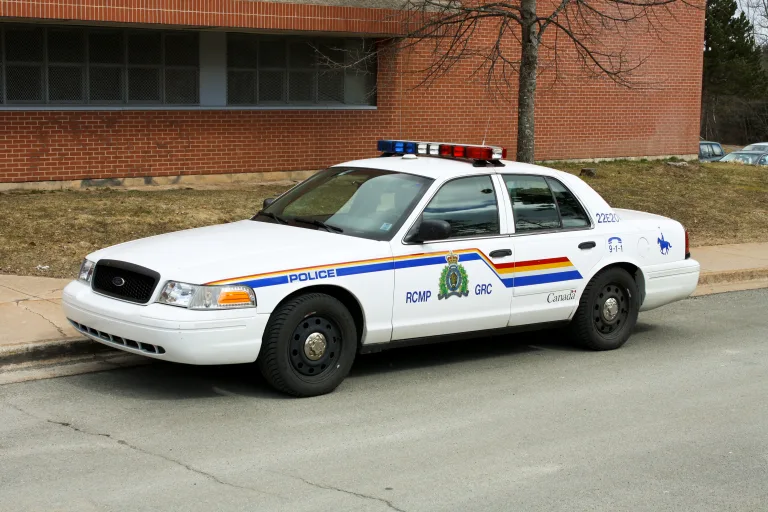
If you have concerns about the on-duty conduct of an RCMP officer, you have options, which can include filing a complaint and suing. The options vary depending on the situation.
What you should know
The Royal Canadian Mounted Police (RCMP) polices most of rural BC and many municipalities. For a full list of communities policed by the RCMP, see the RCMP's detachment finder.
Some BC municipalities — including several in the Vancouver and Victoria areas — are policed by their own police force instead. If your complaint is about a municipal force, see our guidance on complaints against the municipal police.
You may be concerned with the on-duty conduct of an RCMP officer — for example, if you feel they used excessive force during an arrest or investigation, if an officer said or did something that offended you, or if the RCMP damaged your property.
You have at least four options, depending on the situation:
filing a police complaint,
suing the police,
filing a human rights complaint, and
pursuing criminal charges.
Each option serves a different purpose and leads to a different outcome. If possible, seek legal advice before deciding which to pursue — in some cases, it may make sense to pursue more than one. See who can help, below.
Here’s a snapshot of what each of the four options involves.
Filing a police complaint
If you have concerns about an RCMP officer's conduct, you can file a complaint at an RCMP office or with the Civilian Review and Complaints Commission for the RCMP (CRCC), an independent agency that reviews complaints made against RCMP officers.
Filing a police complaint may lead to a recommendation for discipline against the officer. It will not result in a payment of money for any injury or harm you've suffered.
We explain the steps in making a complaint below.
Suing the RCMP
If an RCMP officer injured you, damaged your property, or violated your rights, you may be able to sue the officer and the RCMP in civil court.
Suing the police can lead to a settlement or a court judgment involving a payment of money. A lawsuit is filed in either small claims court or the Supreme Court of BC, depending on the amount sought. Specific rules and processes must be followed. Lawsuits must normally be filed within two years of the incident. For more, see starting a lawsuit.
Filing a human rights complaint
If you believe the RCMP discriminated against you, you can consider filing a human rights complaint. A human rights complaint may lead to a settlement or judgment involving a payment of money.
Complaints against the RCMP are filed with the Canadian Human Rights Commission, and must normally be filed within 12 months of the incident.
Pursuing criminal charges
If you believe an RCMP officer committed a crime, you can pursue criminal charges against them. If charges are laid, the officer faces criminal proceedings.
The process starts with raising your concerns with the RCMP, who may investigate. Their investigation could lead to a report to Crown counsel (the prosecution office in BC) recommending charges; a senior Crown prosecutor then decides whether to approve them. If the RCMP doesn't recommend charges, or the prosecutor declines to charge the officer, you can go before a justice of the peace to ask that the officer be charged. For more, see our information on charging someone with a criminal offence.
If an incident involving a police officer results in death or serious harm, an independent body automatically investigates. The Police Act requires the Independent Investigation Office (IIO) to determine whether an officer may have committed an offence — whether the officer was on- or off-duty, and whether they work for the RCMP or a municipal force.
If the investigation concludes an officer may have committed an offence, the IIO prepares a report to Crown counsel. For more, see the IIO's website.
The steps in filing a police complaint
Anyone with a connection to the on-duty conduct of an RCMP officer can complain about them. A connection means the officer's conduct affected you directly or someone you're acting for, you were present when it occurred, or you suffered harm or loss because of it.
If the person complaining is under 13, a parent or guardian must help them make the complaint.
Make your complaint to the Civilian Review and Complaints Commission for the RCMP (CRCC), or at an RCMP office.
The CRCC is an independent agency, separate from the RCMP, that ensures public complaints about RCMP officers are examined fairly and impartially. It has interpretation services available in various languages.
You can make a complaint to the CRCC:
using the online complaint form on the CRCC website, or
by mail or fax, using the fillable complaint form on the CRCC website.
Complain as soon as possible after the incident, while your memory is fresh and evidence is still available. The deadline to complain is one year from the date of the incident. The RCMP or the CRCC — whichever receives your complaint first — can extend this deadline if there's a good reason to do so.
The CRCC usually sends your complaint to the RCMP to investigate (though sometimes the CRCC investigates it directly). The RCMP investigates and then reports back to you in writing — often called a “letter of disposition” or a “notice of direction.” If you're satisfied with that report, the complaint process ends there.
You should hear from the RCMP's investigator within 45 days of your complaint being formally accepted. There's no fixed deadline for the RCMP to finish the whole investigation, though — complex cases can take longer.
If you're not satisfied with the RCMP's report, you can ask the CRCC to review your complaint — you can make the request online, or by mail or fax. The CRCC website explains the review process in more detail.
You have 60 days to request a review, from when you receive the RCMP's report. The CRCC can extend this deadline if it decides there's a good reason.
During its review, the CRCC gathers the relevant information from the RCMP and can review the complaint without further investigation, ask the RCMP to investigate further, conduct its own investigation, or hold a public hearing.
If the CRCC is satisfied with the RCMP's report, it sends you a final report with its reasons, along with copies to the RCMP Commissioner, the federal minister responsible for the RCMP, and the officer you complained about. That ends the process.
If the CRCC is not satisfied with the RCMP's report, it sends an interim report to the RCMP Commissioner and the responsible federal minister. The RCMP Commissioner responds, explaining what action, if any, the RCMP will take. The CRCC then sends a final report to you, the Commissioner, the minister, and the officer involved.
Common questions
Not necessarily. The complaint process can lead to a finding that the officer acted improperly and a recommendation for discipline — but it doesn't impose discipline itself, and it won't result in dismissal or criminal charges. In more serious cases, though, your complaint can prompt the RCMP to open a separate internal (Code of Conduct) or criminal investigation, which can carry those consequences. If what you're after is compensation, see what you should know, above.
No. You don't need a lawyer to file a complaint or ask for a review, and there's no cost to do either. You can also ask someone else — a friend, an advocate, or a lawyer — to file on your behalf or represent you, as long as you give your consent. That said, if your complaint overlaps with a criminal charge against you, or you're weighing a lawsuit, get legal advice first. See who can help, below.
No. You can complain about how the officer behaved — their attitude, or how they handled things — but the complaint process won't change whether the ticket stands. To challenge the ticket itself, follow the dispute instructions printed on it and take it to court.
Police can lawfully seize a vehicle as evidence without charging you. Under the Criminal Code, they must report the seizure to a justice of the peace, and they can hold your vehicle for up to three months from the date of seizure without a court order. If they need more time, they must apply to a judge for an extension.
You're entitled to know why your vehicle was seized. Contact the RCMP detachment that took it (here’s a contact list) and ask for the file number, the legal basis for the seizure, and whether a report was filed with a justice of the peace.
If your vehicle is instead the subject of a civil forfeiture claim — a separate provincial process used when police believe a vehicle is connected to unlawful activity — you'll receive formal notice, and a different process applies.
If the delay is causing real hardship — for example, you need the vehicle for work — a lawyer can apply to court for its early return. See who can help, below.
Who can help

Access Pro Bono's Legal Advice Clinics
Volunteer lawyers provide 30 minutes of free legal advice to people with low or modest income.

BC Legal Referral Service
Helps you connect with a lawyer, notary or paralegal for a free 15- to 30-minute consult to see if you want to hire them.

BC Legal Directory
Search for a lawyer by community, area of law, or language spoken. From the Canadian Bar Association, BC Branch.

This information from People’s Law School explains in a general way the law that applies in British Columbia, Canada. The information is not intended as legal advice. See our disclaimer.
Related
On Dial-A-Law
Dial-A-Law has more information on Courts & police in the section on Crime.